
Time travel is really hard to write about.
– Craig Pelton, Dean of Greendale Community College
Part of the fun with these types of movies is soaking up all the hand waving and non-explanations written in to smooth over the continuity gaps. In alternate timelines we trust. Terminator Genisys serves up a heaping plate of “it doesn’t matter how the past was changed, but now that it is, here’s what we need to do.” Why bother explaining any more than you have to? While that may not sound promising, it isn’t so much a criticism either. What the story lacks in scientific rigor (faint damnation for a movie), it attempts to make up for in Back to the Future-style time-hopping hi-jinks.
We all know the story. War rages between humanity and Skynet. Skynet sends a robot assassin disguised as Arnold Schwarzenegger back in time to prevent the birth of humanity’s savior. A protector is also sent back in time, and it’s up to him to stop the assassin. Terminator Genisys shows us the future war, then rehashes the plot of The Terminator and then jumps to 2017. The main kernel of the story is unchanged, only this version has opened the floodgates on time travel. In The Terminator, time travel was Shakespearean tragedy. Now, it’s convenient. Read more…
The Terminator franchise is dear to me. The Terminator (1984) is an all-time favorite. Catching Terminator 2: Judgment Day (1991) on cable in the nineties was a formative experience. I thought the ending of Terminator 3: Rise of the Machines (2003) was bold and admirable, enough so that it salvaged a so-so film on the whole. Terminator Salvation (2009) was a departure from the world of the first three movies in almost every way, but it still feels like a worthy third sequel. With all of the explosions, and all of Christian Bale’s yelling, Salvation is at least an exercise in loudness.
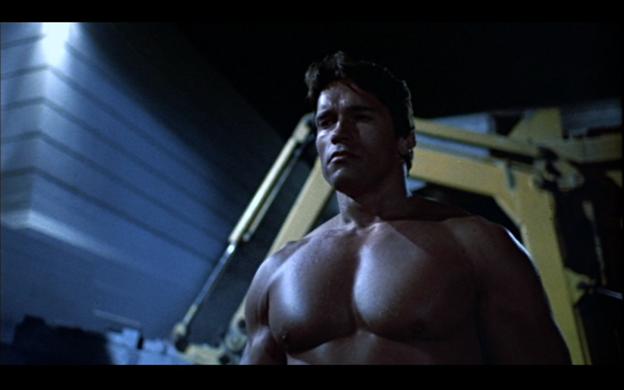
Today, Terminator Genisys hits theaters. I spent the last week watching the earlier movies again, not that I needed the excuse. The original is one of the most-watched films on my shelf, and T2 has possibly aired on television more than any other film in my lifetime. The latter two aren’t there yet, and it’s hard to see either attaining the adoration of the first or the outright popularity of the second. This brings me to an interesting point of contention among Terminator aficionados. Which is the best Terminator movie? [Poll question can be found at the bottom of the post!] Read more…
Yeah, but, John, if The Pirates of the Caribbean breaks down, the pirates don’t eat the tourists.
Dr. Ian Malcolm
Malcolm (Jeff Goldblum) made that prophetic analogy in Jurassic Park, a film released twenty-two years ago. In truth, Jurassic Park never made it to the tourist phase in any of the first three Jurassic films. Jurassic World brings the analogy to actuality, introducing us to a full-fledged theme park that entertains twenty thousand guests a day, and cooks up new attractions every few years. Jurassic World is the fun-house reflection of Disney World, Epcot, etc., obnoxious product placement and all.

Universal Pictures
The stakes are increased dramatically here. One way this is demonstrated is in the call-backs to the terrors from the earlier films, only now the terror has been distilled into anodyne theme park attractions. The aviary from Jurassic Park III is back. Tour groups roll through a Gallimimus stampede like they’re whale watching. The T. rex and Velociraptors are back, but they are far more cooperative this time around. Jurassic World even thumbs its nose at Jaws. A great white shark would normally be the pièce de résistance of any marine exhibit. At Jurassic World, the shark is actually just dessert for a truly monstrous Mosasaur. Read more…
Confession time. I didn’t actually begin watching The O.C. on air until the middle of the second season. If you’re familiar with season one of The O.C., then you know just how lost I might have been. Diving right into a tumultuous soap-style primetime drama mid-season might seem foolhardy in the Netflix Binge Era we currently inhabit, but with The O.C., it just didn’t matter. The characters were so likable and the intermingling of storylines was intoxicating. Being in high school at the time myself, I hadn’t experienced such a show before. I’m sure it didn’t hurt that the first episode I caught on air was, “The Mallpisode,” or, the episode where the core four teen characters (Ryan, Marissa, Seth and Summer) got locked in the mall overnight.
Mall fantasies aside, The O.C. has always been about wish fulfillment. A kid with a troubled past gets a second chance in posh Newport Beach. A high school outcast makes a new friend and finally experiences some adventure. A beauty queen finally finds someone who understands her. A divorcee transcends her checkered past to become the most powerful person in town. The list goes on and on, and each situation is a variation on the American Dream. That was the main thrust of the first season.

I was born in a post-Mad Max world. To me, the first three movies; Mad Max (1979), The Road Warrior (1981), and Mad Max: Beyond Thunderdome (1985), were historical documents. They were oddities both quaint, because of their fable-like plots, and sophisticated, because of their detail-savvy action sequences. The new film, Mad Max: Fury Road is truly a breath of fresh air among its contemporary peers, but the blueprint for its success is hardly something that’s been cooked up by the latest hotshot director.

Courtesy JoBlo.com
George Miller is a septuagenarian (he’s 70, in case you haven’t heard), and he has written and directed all four Mad Max films. While Tom Hardy has replaced Mel Gibson as Max Rockatansky, the formula is the same. This is a film about anarchy, redemption, survival, and family, with a two-hour epic desert chase at its core. While The Road Warrior is often cited as being one of the all time great actioners, Fury Road tops it in about every way imaginable. Read more…
 Our Planet Burke